Modernizing Rail Operations with the RAMPS Platform
At General Electric, I led UX design on the RAMPS platform, a next-generation system designed to replace legacy transportation tools and modernize rail operations.
This initiative transformed fragmented, paper-driven workflows into a unified, transparent, and user-centered platform, improving operational efficiency and enabling better decision-making at scale.
Company
General Electric
Timeline
2014 — 2015
Role
Lead UX Designer
Focus
Rail Operations Platform


Before
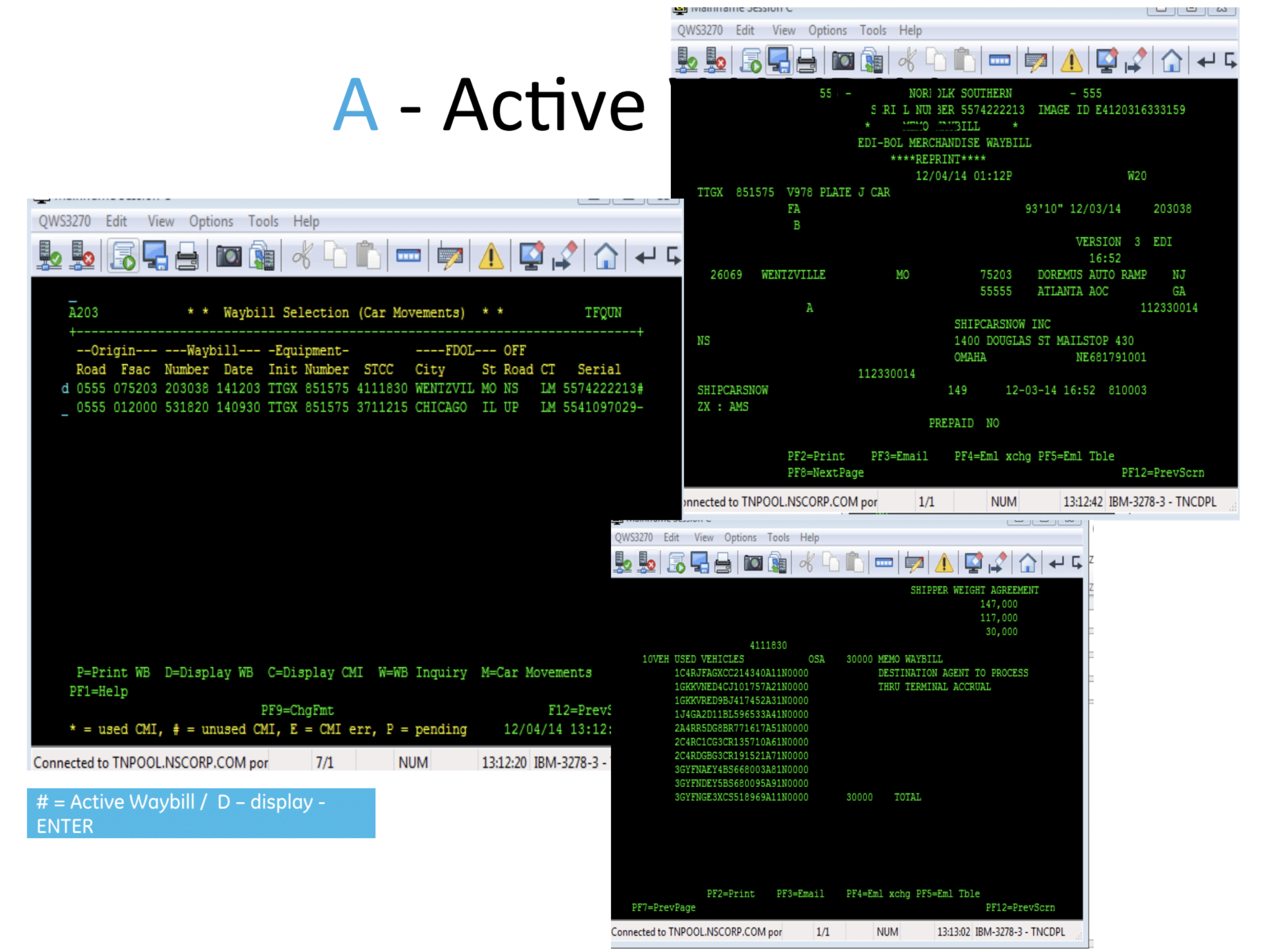
Legacy mainframe terminals with complex waybill and cargo tracking systems

After
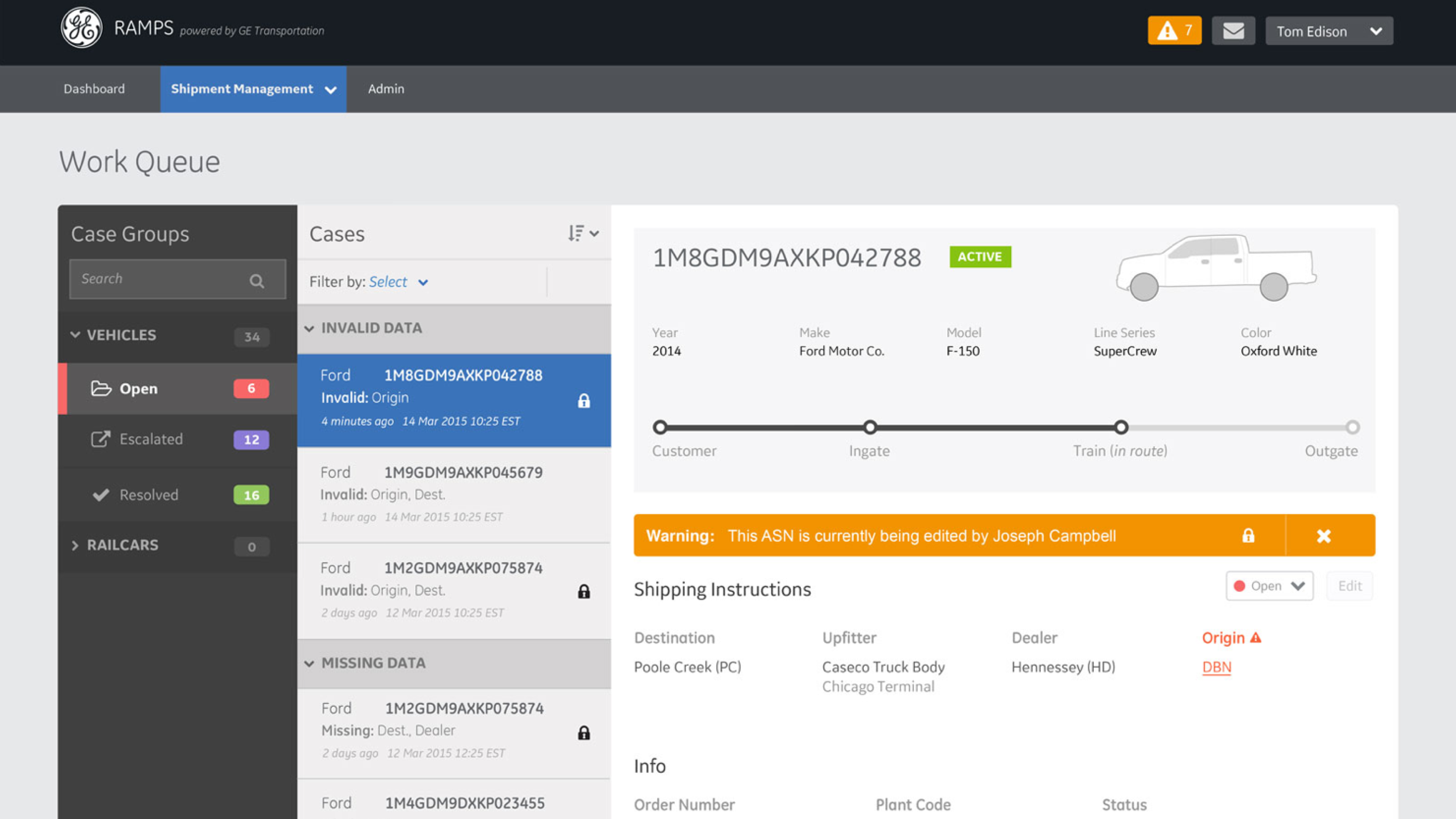
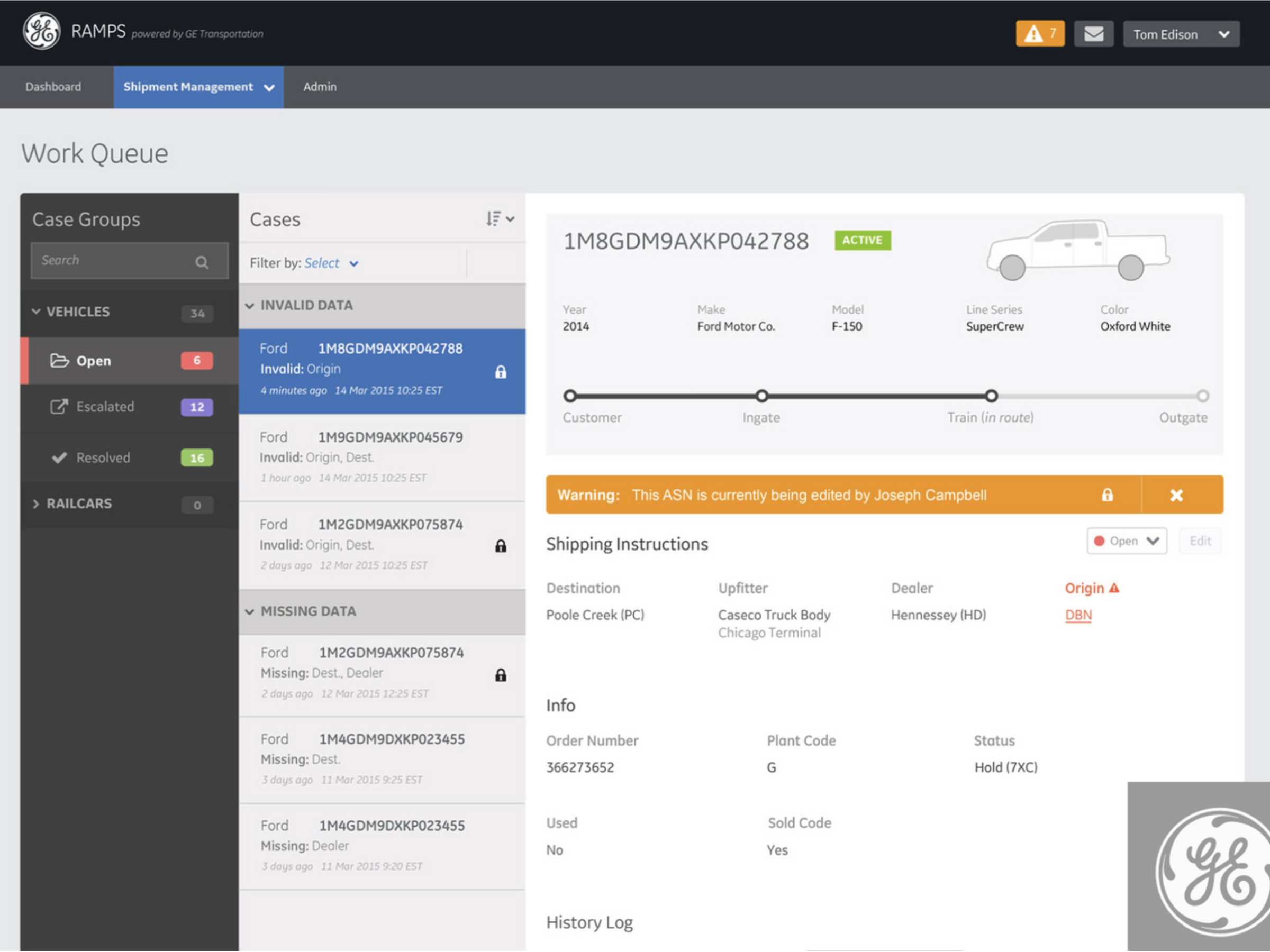
Unified digital platform with real-time visibility and case management
Rail operations relied on legacy systems that introduced significant inefficiencies.
Legacy systems (TADS/AMS) created major operational challenges across terminals. Field research revealed critical tasks like damage reporting could take up to 45 minutes for simple issues.
Workflows required constant manual verification, calls, and coordination. Data inconsistencies and system latency led to frequent rework and delays.
Manual Processes
Heavy dependence on paper workflows and manual coordination
No Single Source of Truth
Data fragmented across multiple disconnected systems
Limited Visibility
No real-time visibility into operations across terminals
High Cognitive Load
Operators managing complex workflows with tribal knowledge
These inefficiencies directly impacted throughput, accuracy, and operational performance across the rail network.
Driving a research-led approach to platform modernization.
Research & Discovery
- Conducted field research across multiple rail terminals and user roles
- Facilitated co-design workshops and stakeholder sessions
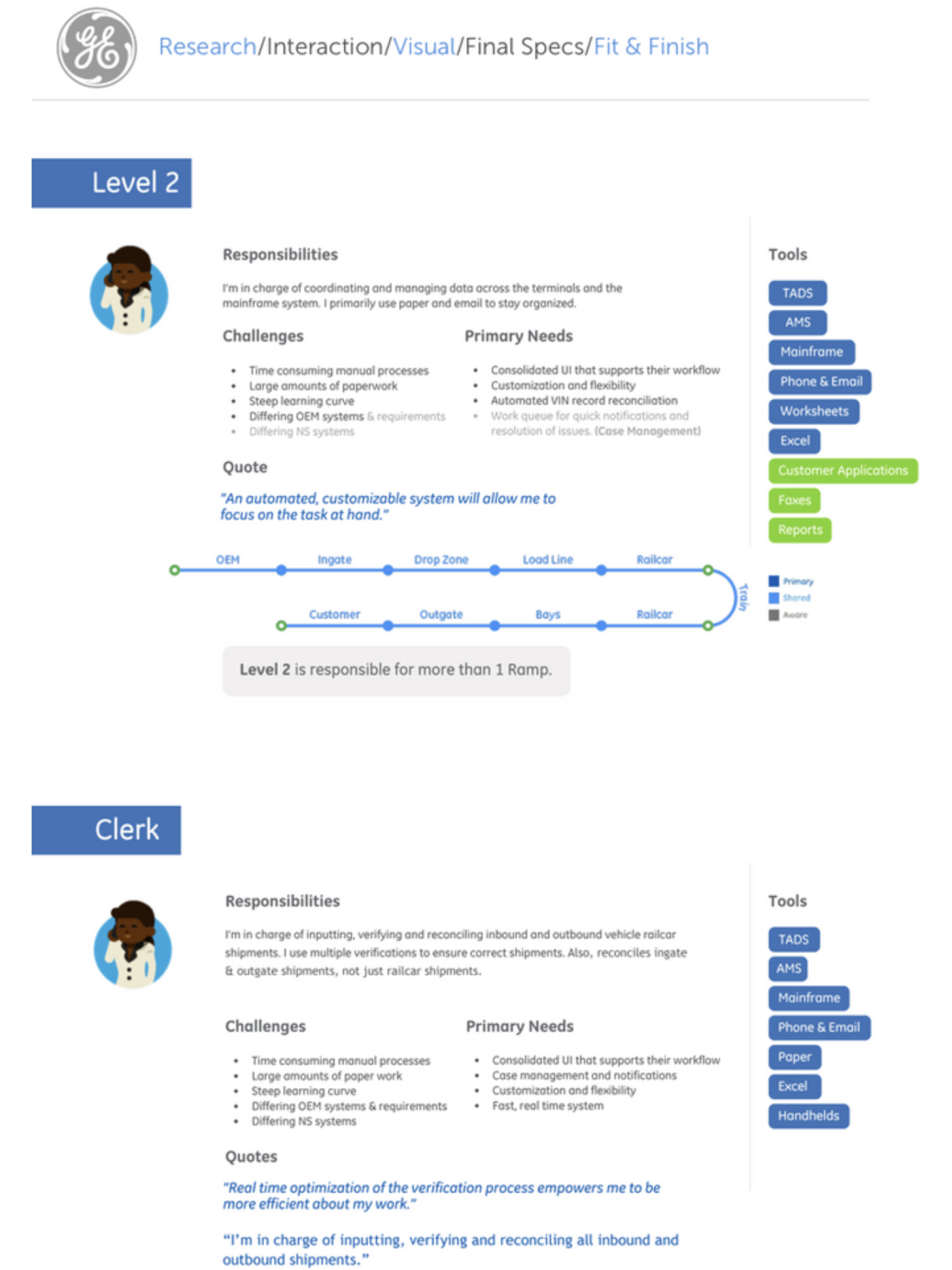
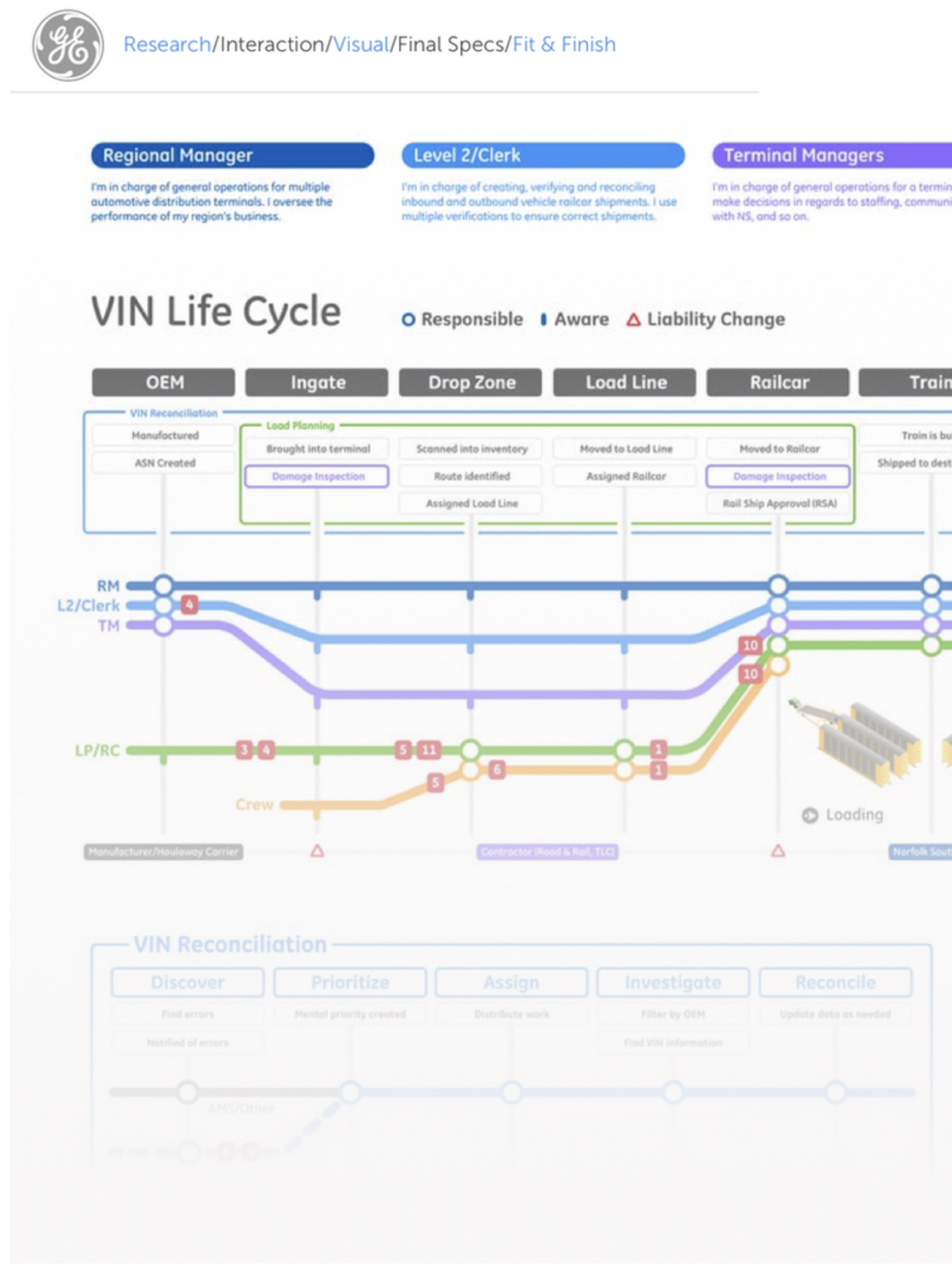
- Synthesized insights into personas, VIN journey maps, and workflow diagrams
This created alignment across teams and uncovered high-impact opportunities for optimization.
Bridging Legacy Systems with Modern UX
- Worked directly with mainframe-based systems to understand constraints
- Translated complex workflows into structured, intuitive experiences
- Defined a scalable approach to modernizing systems without full replacement
This approach allowed us to modernize the experience while respecting legacy system realities.
The RAMPS platform aimed to deliver a unified, end-to-end workflow system for rail operations.
Supply & Demand Visibility
Improve railcar supply and demand visibility across terminals
Accurate Load Planning
Enable more accurate load planning and forecasting
Increased Reliability
Increase reliability and throughput across terminals
Modern UX
Deliver a modern, intuitive UX across all workflows
As Lead UX Designer, I contributed across both strategy and execution.
UX Architecture & Workflow Design
Led the overall UX architecture and workflow design for the RAMPS platform
Wireframes, Prototypes & System Concepts
Created detailed wireframes, interactive prototypes, and system-level concepts
Workshops & Design Critiques
Facilitated workshops with stakeholders and led design critique sessions
Research & Engineering Collaboration
Collaborated closely with research and engineering teams throughout
I played a key role in translating operational complexity into usable, scalable product experiences.

User Personas
Level 2 and Clerk role research

VIN Life Cycle Journey Map
Role swimlanes and workflow stages

Work Queue Wireframes
Annotated UI specifications
From fragmentation to a unified platform.
Before
- Paper-based workflows and manual coordination
- Multiple disconnected systems and reports
- No real-time tracking or system visibility
- High reliance on memorization and tribal knowledge
After (Vision)
- Unified platform with end-to-end workflow visibility
- Real-time VIN tracking and system feedback
- Automated load planning and decision support
- Digital work orders and mobile-enabled operations
The transformation targeted measurable improvements across operations.
Workflow Efficiency
Reduced time for key workflows (e.g., damage reporting) from ~45 minutes to significantly faster digital flows
Process Automation
Minimized manual processes across load planning, tracking, and verification workflows
Real-Time Visibility
Enabled real-time visibility, reducing delays caused by data latency and system fragmentation
Cognitive Load
Reduced cognitive load by consolidating workflows into a single system of record
Delivering measurable impact across product, operations, and strategy.
Product Impact
- Defined foundation for next-generation operational platform
- Introduced modern UX layer across legacy infrastructure
- Improved usability across complex, high-stakes workflows
Operational Impact
- Increased efficiency by reducing manual coordination and rework
- Enabled faster, more accurate decision-making
- Improved visibility across terminals and workflows
Strategic Impact
- Shifted GE toward operator-centered platform thinking
- Created alignment through shared research and artifacts
- Established scalable foundation for future system evolution
Next Project
Toptal