Reimagining the Restaurant Operating System
As Product Design Manager, I led design across SpotOn's hospitality ecosystem, spanning Back of House (BOH), Front of House (FOH), guest experiences, and kitchen operations.
My focus was to define the future of SpotOn's platform by transforming a legacy system into a modern, scalable restaurant operating system while enabling merchants to self manage critical workflows without reliance on support teams. I was also the first design leader to bring AI into SpotOn's design process over two years ago, using tools like Claude, v0, Lovable, and Figma Make to rapidly prototype future visions.
Company
SpotOn
Timeline
2023 — Present
Role
Product Design Manager
Focus
Restaurant Operating System


Before
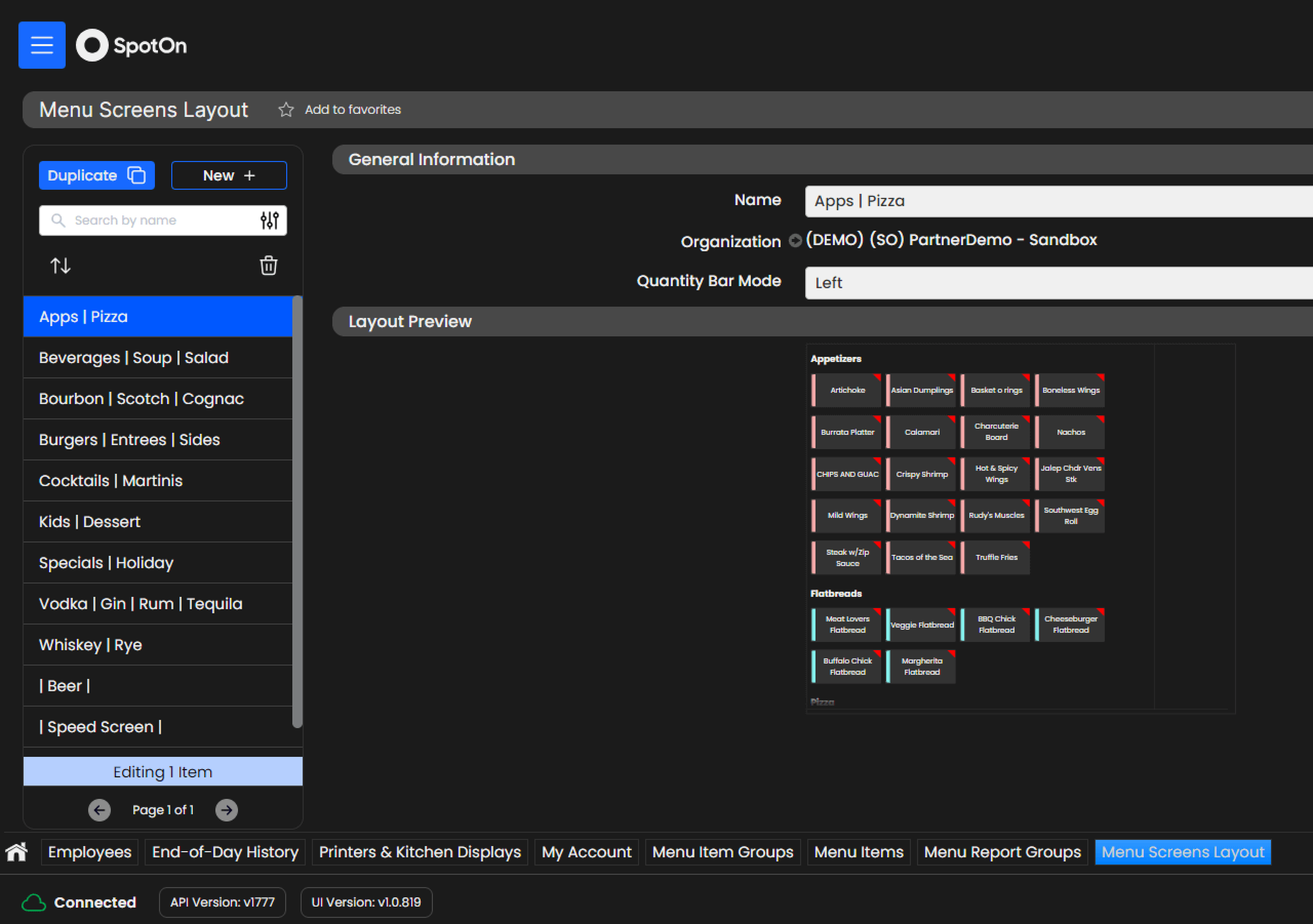
Complex workflows requiring support team intervention

After
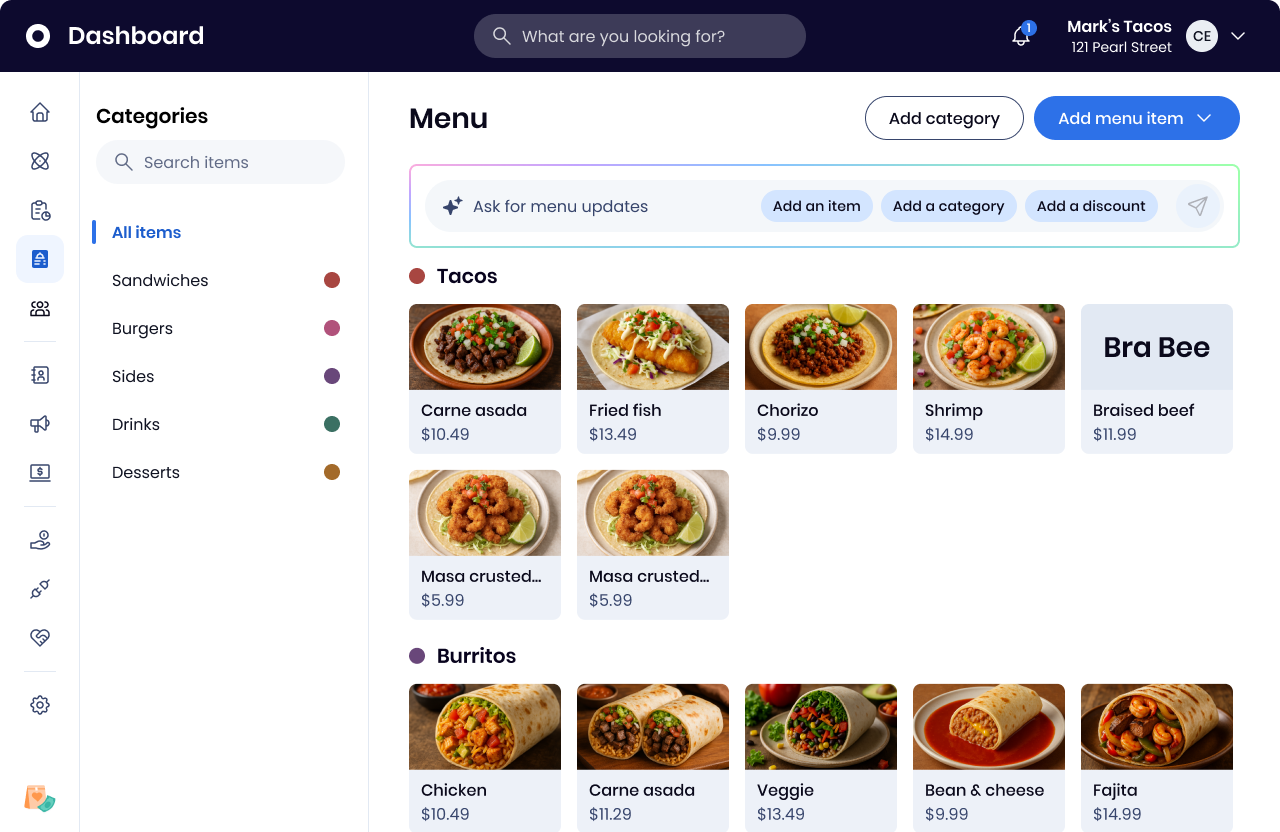
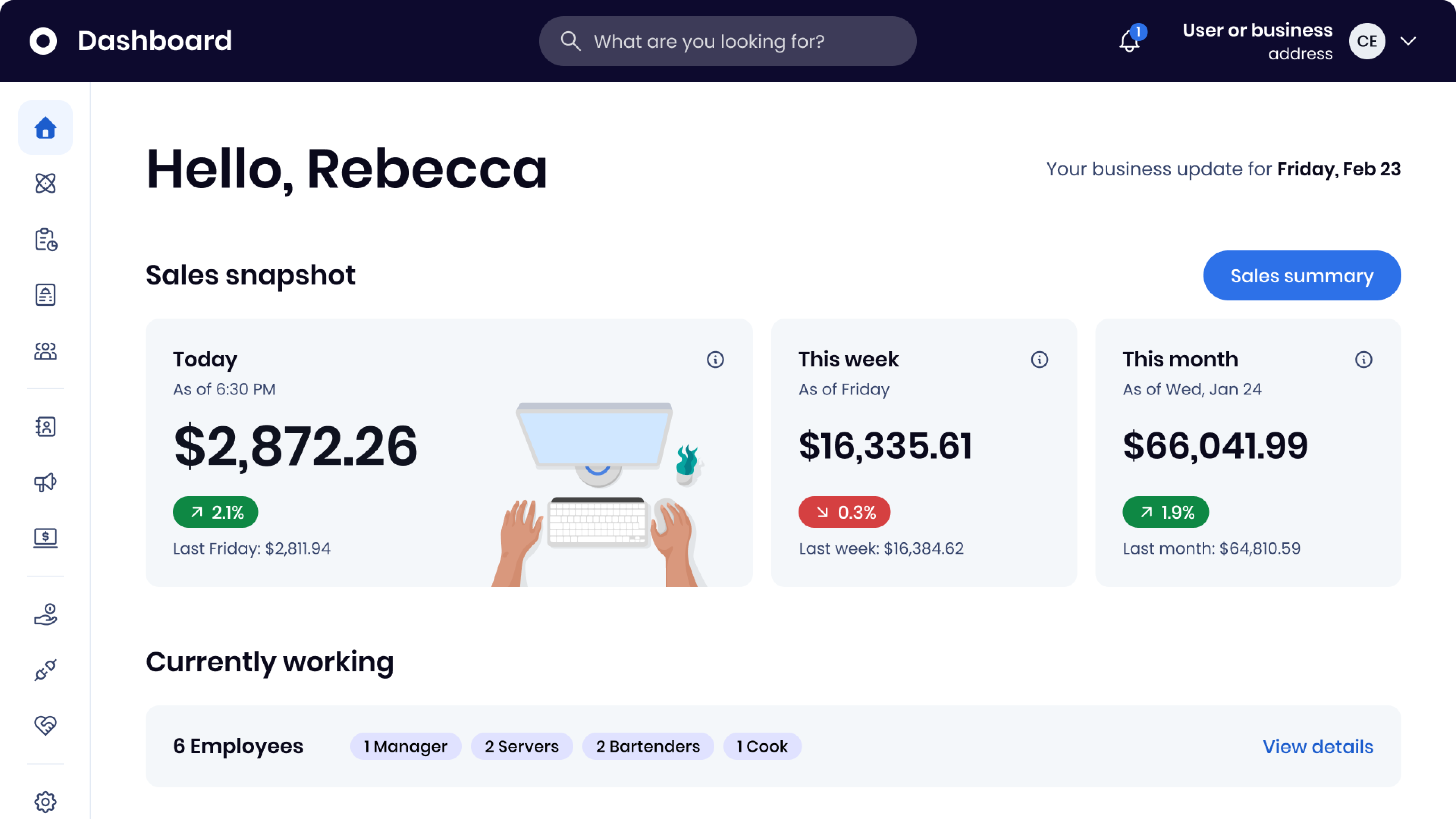
Intuitive interface enabling merchant autonomy
SpotOn's legacy platform created significant friction for restaurant operators.
Core workflows, especially menu management, were overly complex, often requiring support or implementation teams to make even minor updates. This not only slowed down restaurant operations but also created ongoing operational costs for SpotOn.
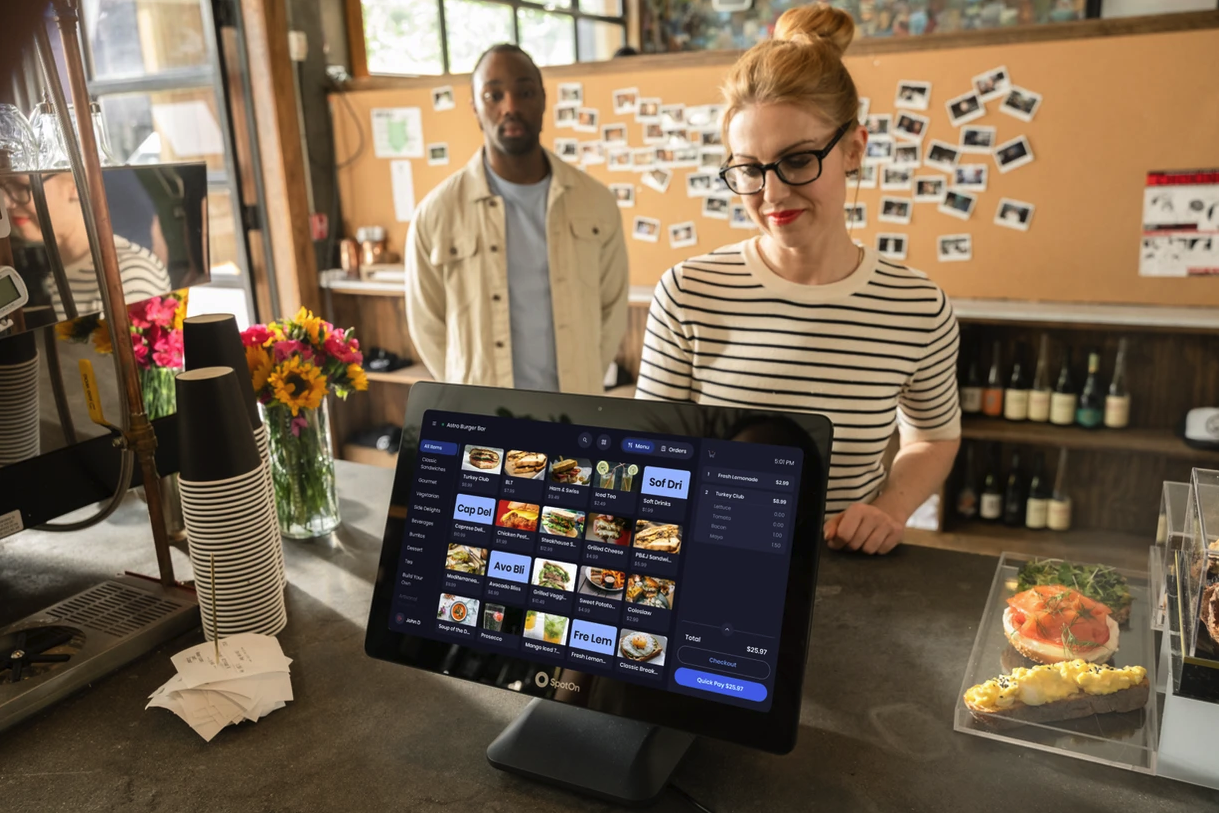
Clunky POS experience
Unintuitive interfaces slowed down daily operations
Fragmented systems
BOH, FOH, and guest experiences lacked cohesion
Not built to scale
Platform couldn't meet modern product expectations
The opportunity was to rebuild the system from the ground up, creating a unified, intuitive platform that empowered merchants to operate independently.
I played a central role in defining how design operated within the organization and how the product evolved.
Establishing a New Way of Working
- Introduced and operationalized a TRIO model (Design, Product, Engineering) to drive tighter collaboration and faster decision-making
- Defined new rituals and workflows that improved alignment across cross functional teams
- Facilitated workshops to bring teams together around shared product goals and user needs
Driving Strategic Alignment
- Partnered with product and executive stakeholders to shape the future vision of SpotOn's platform
- Built relationships across leadership to align teams around a unified product direction
- Helped transition the organization from reactive execution to proactive, strategy led design
The vision was to create a self service, scalable restaurant operating system that unified all aspects of the business.
Simplicity at Scale
Reducing complexity in high frequency workflows
System Cohesion
Aligning BOH, FOH, POS, and guest experiences into a single ecosystem
Merchant Autonomy
Enabling users to manage their business without external support
Modern UX Foundation
Building from the ground up with scalability in mind

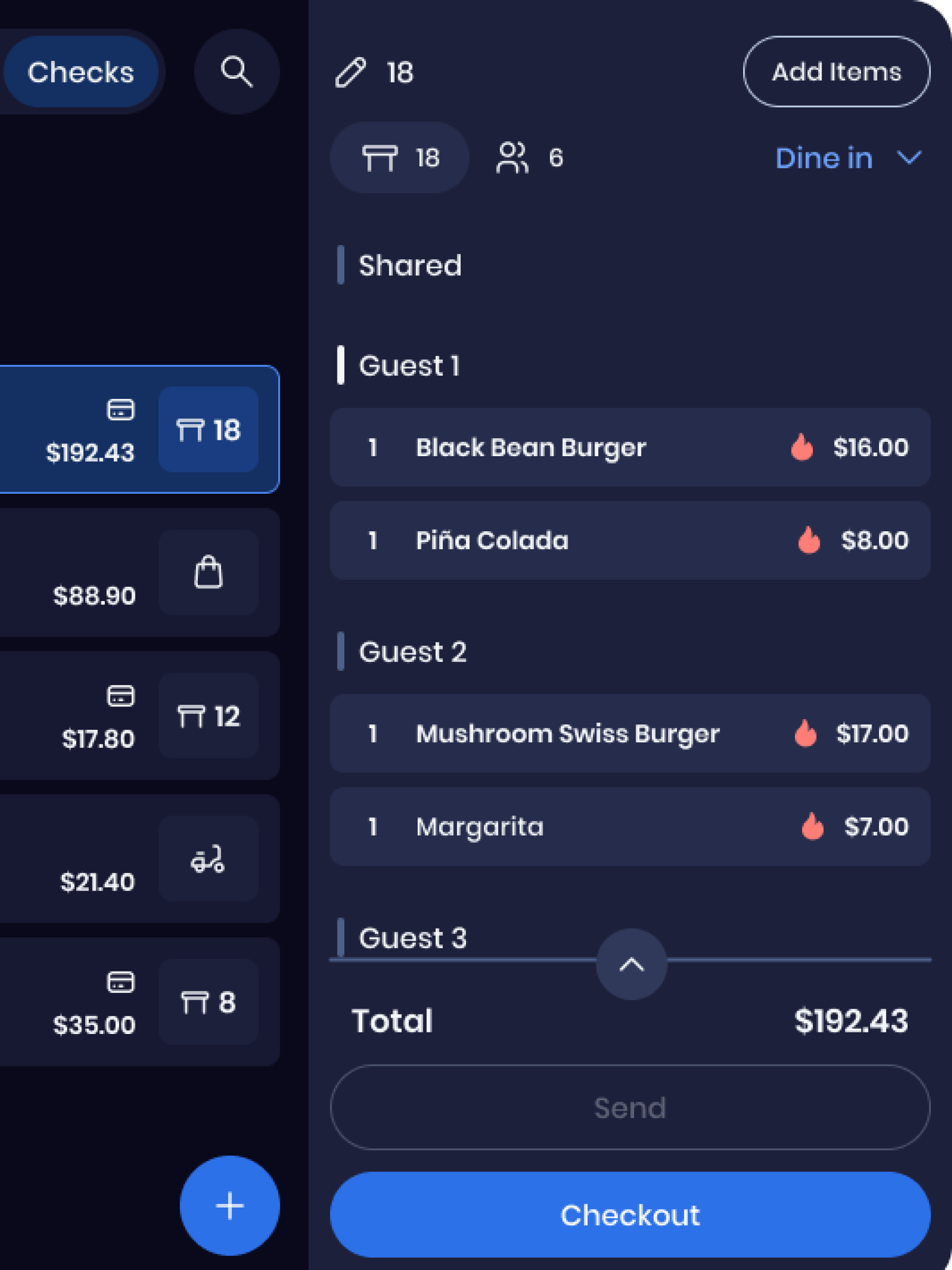
POS Checkout Flow
Managing orders and payments

Order Management
Managing open checks and order status

Table Management
Floor plan editor with drag-and-drop tables
While leading the team and defining strategy, I stayed closely involved in the work, stepping in at critical moments to guide product direction.
Facilitated and actively participated in visioning sessions and design workshops, shaping how the team approached problem solving
Partnered directly with designers to brainstorm and refine solutions, ensuring alignment with the broader system vision
Guided teams through complex product decisions, helping translate strategy into actionable design direction
Played a hands on role in defining how experiences should connect across platforms
Leveraged AI tools like Claude, v0, Lovable, and Figma Make to rapidly prototype future visions and accelerate design exploration
Rather than operating as a purely hands off leader, I worked alongside the team to ensure quality, clarity, and consistency in execution.
A key part of the transformation was moving from fragmented experiences to a unified platform approach.
Cross Platform Consistency
Helped drive consistency across POS, BOH, kitchen, and guest facing experiences
Scalable Design System
Contributed to the evolution of a scalable design system foundation
Future Proof Decisions
Ensured that design decisions supported long term platform growth, not just immediate features
This shift enabled the organization to move toward a more cohesive and extensible product ecosystem.

Owner/Manager journey map showing experience flow from onboarding to daily operations

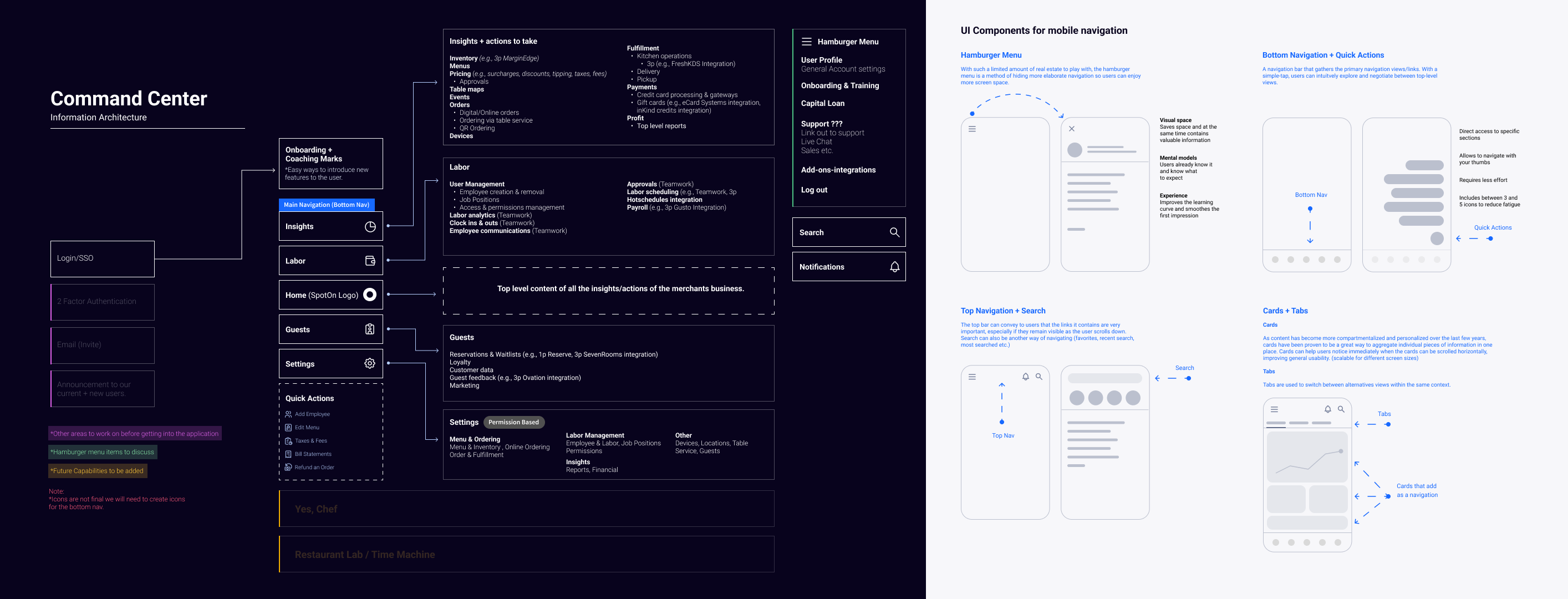
Command Center navigation structure with UI component patterns for mobile
A key part of evolving SpotOn's platform was rethinking how integrations and partnerships drive growth.
The existing model created friction:
- Integrations were fragmented and hard to discover
- Onboarding was inconsistent and slowed activation
- Limited tooling increased support burden and operational cost
A New Integration Strategy
We shifted to a curated, embedded partner ecosystem, making integrations a seamless part of the core product experience.
Embedded workflows within the platform
Simplified discovery and activation
Consistent, unified experiences
Focus on high value partner integrations
Why It Matters
of buying decisions are influenced by ecosystem depth
faster revenue growth driven by ecosystems
efficiency improvement from connected systems
future vision for integration launch time
Designing for Speed & Simplicity
Instant discovery
One click setup
No context switching
Fast time to value
Impact
Product Impact
- Reduced reliance on support teams by enabling self service workflows
- Improved usability across critical restaurant operations
- Established a foundation for a modern, scalable product platform
Organizational Impact
- Strengthened collaboration through the TRIO model and new team rituals
- Elevated design's role in shaping product strategy
- Created alignment across teams and leadership around a shared vision
Team Impact
- Mentored and guided mid and senior designers
- Helped teams operate more strategically and confidently within complex problem spaces
Driving efficiency across restaurant operations.
5+
Product areas unified under a single design system and shared patterns
Self-Service
Reduced merchant reliance on support by enabling independent configuration
TRIO Model
Established cross-functional rituals connecting product, design, and engineering
Scale
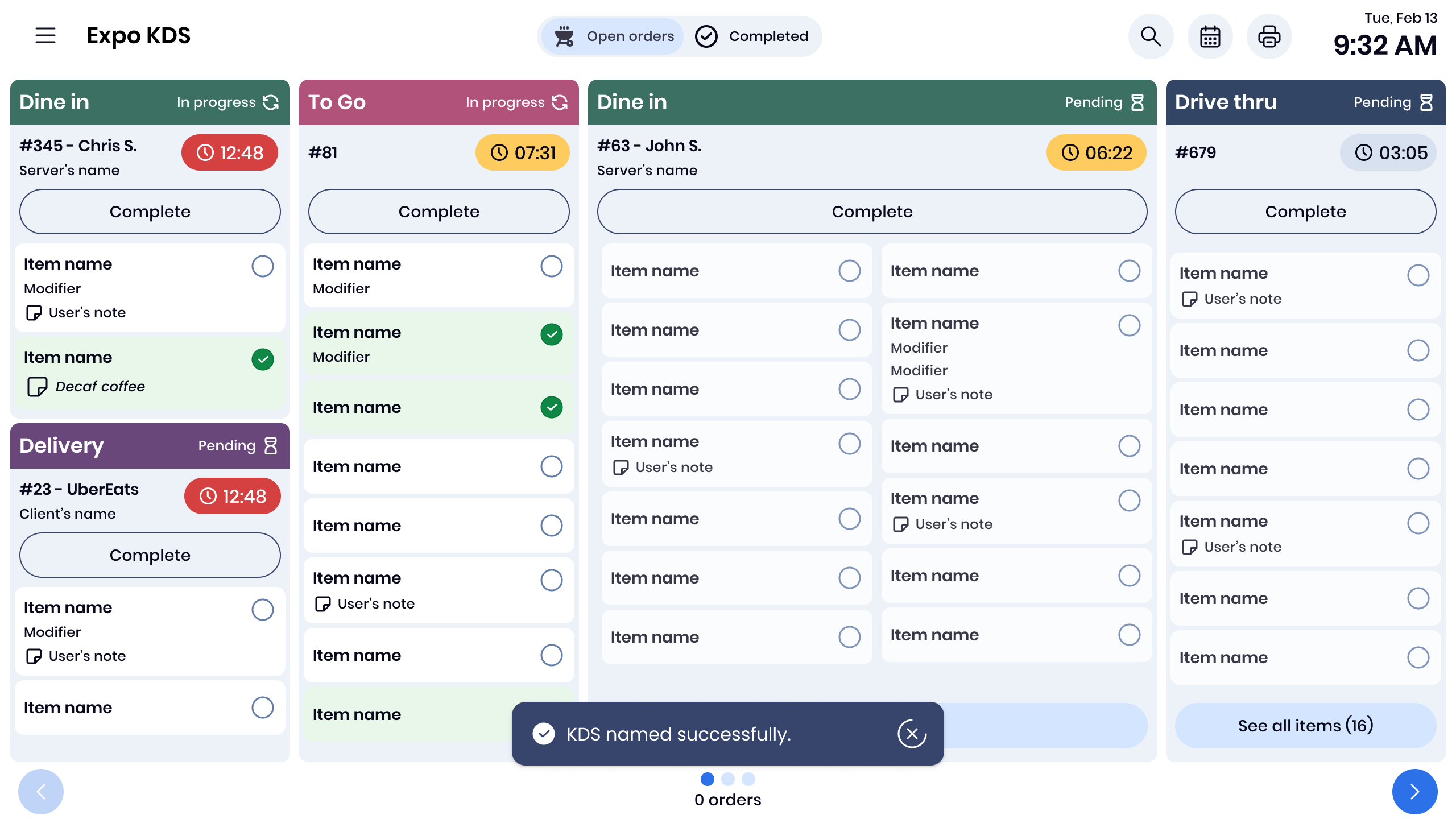
Built foundations enabling consistent experiences across POS, KDS, and back-office
What this project reinforced about design leadership.
Systems over screens
Sustainable transformation comes from building cohesive platforms, not isolated features.
Process enables scale
The TRIO model and new rituals created infrastructure for teams to move faster together.
Stay connected to the work
Being hands on at critical moments ensures quality and builds trust with the team.
Empower users, reduce dependencies
Self service capabilities create value for both merchants and the organization.


Next Project
Scythe